

2026.11.11
- Biotechnology

In our previous column, “Biotechnology Column #1: What Are Microorganisms?”, we concluded with the statement:
“In fact, we live surrounded by microorganisms. More accurately, we could not maintain a healthy life without them.”
In this column, we will continue that discussion by introducing some of the microorganisms that live surprisingly close to us in our everyday lives.
Are There Many Microorganisms on Our Skin?
No matter how closely you stare at the palm of your hand, you will not be able to see microorganisms (and if you can see them with the naked eye, you should probably go to see a doctor immediately). As their name suggests, microorganisms are living organisms so small that they are invisible to the eye. However, despite being unseen, our skin is actually home to approximately 10,000 to 100,000 microorganisms per square centimeter.
The folds of the skin and the openings of pores provide ideal places for microorganisms to settle. In addition, substances such as sebum and dead skin cells accumulate in these areas, forming what is commonly known as skin debris. For microorganisms, this material serves as an excellent nutrient source. In microbiological terms, such nutrient sources are referred to as substrates. Much of human body odor is caused by compounds produced when microorganisms break down these components of skin debris. However, this does not mean that excessive washing or sterilization is the answer.
Healthy human skin naturally hosts a diverse and balanced community of microorganisms. Competition for nutrients and living space, along with differences in growth conditions, help maintain this balance and create a diverse microbial ecosystem. When microorganisms are drastically reduced, this balance can be disrupted, allowing only certain species to flourish. In some cases, this imbalance may contribute to skin problems or disease. Skin microorganisms are also closely associated with the immune system. Moderate microbial stimulation is known to promote the secretion of antimicrobial substances by skin cells.
Humans and microorganisms have developed a symbiotic relationship over an unimaginably long period of time. The presence of microorganisms on our skin is not a sign of uncleanliness. Rather, it is a necessity for maintaining good health.
Are There Microorganisms Inside the Human Body?
There are essentially two major surfaces of the human body that are in direct contact with the outside world. The first is the skin surface discussed above. The second is the inner surface of the digestive tract. Although we tend to think of the digestive tract, extending from the mouth through the esophagus, stomach, and intestines, as being inside the body, its inner lining can also be viewed as a point of contact with the external environment. Just like the skin, the digestive system is inhabited by vast numbers of microorganisms. However, despite both being interfaces with the outside world, the environments of the skin and digestive tract are dramatically different.
The biggest differences are the abundance of nutrients (substrate concentration) and temperature conditions. The food we eat is also food for microorganisms. Since food continuously enters the digestive system, it provides an environment far richer in nutrients than the skin surface. In addition, the human body maintains a relatively stable temperature through body heat. For microorganisms, this is essentially an ideal living environment. Under such favorable conditions, it is hardly realistic to expect microorganisms not to grow.
Is the Human Body an Excellent Cultivation Device?
One milliliter of saliva contains approximately 10 million to 1 billion microorganisms. With numbers like these, it is easy to understand why microorganisms can contribute to tooth decay. The situation changes dramatically in the stomach. Powerful gastric acid kills many microorganisms, reducing microbial counts to only about 100 to 1,000 cells per milliliter of gastric fluid. However, microorganisms that survive the stomach eventually reach the intestines, where abundant nutrients and stable temperatures await them. As a result, they begin multiplying again. In the large intestine, the number of microorganisms can exceed 100 billion cells per gram of feces. In other words, every day we encounter enormous numbers of microorganisms in the restroom. A concentration of 100 billion microorganisms per gram is truly astonishing.
As a manufacturer of incubator shakers, we must admit that achieving such high cell densities is not easy. Even globally, cultivation levels below one-tenth of this value are more common. Furthermore, food consumed by humans is typically excreted within approximately 24 hours.
Yet within that short period, the body maintains an environment capable of supporting 100 billion microorganisms per gram. Viewed from this perspective, the human body may be considered an exceptionally effective natural bioreactor.
The Unexplored World of Gut Microorganisms
The digestive tract contains vastly more microorganisms than the skin surface. Consequently, the relationship between humans and these microorganisms is extremely intimate. In recent years, concepts such as gut health and probiotics have gained considerable attention, reflecting a growing recognition of their importance. Probiotics are live microorganisms that provide beneficial health effects to humans when consumed in adequate amounts.

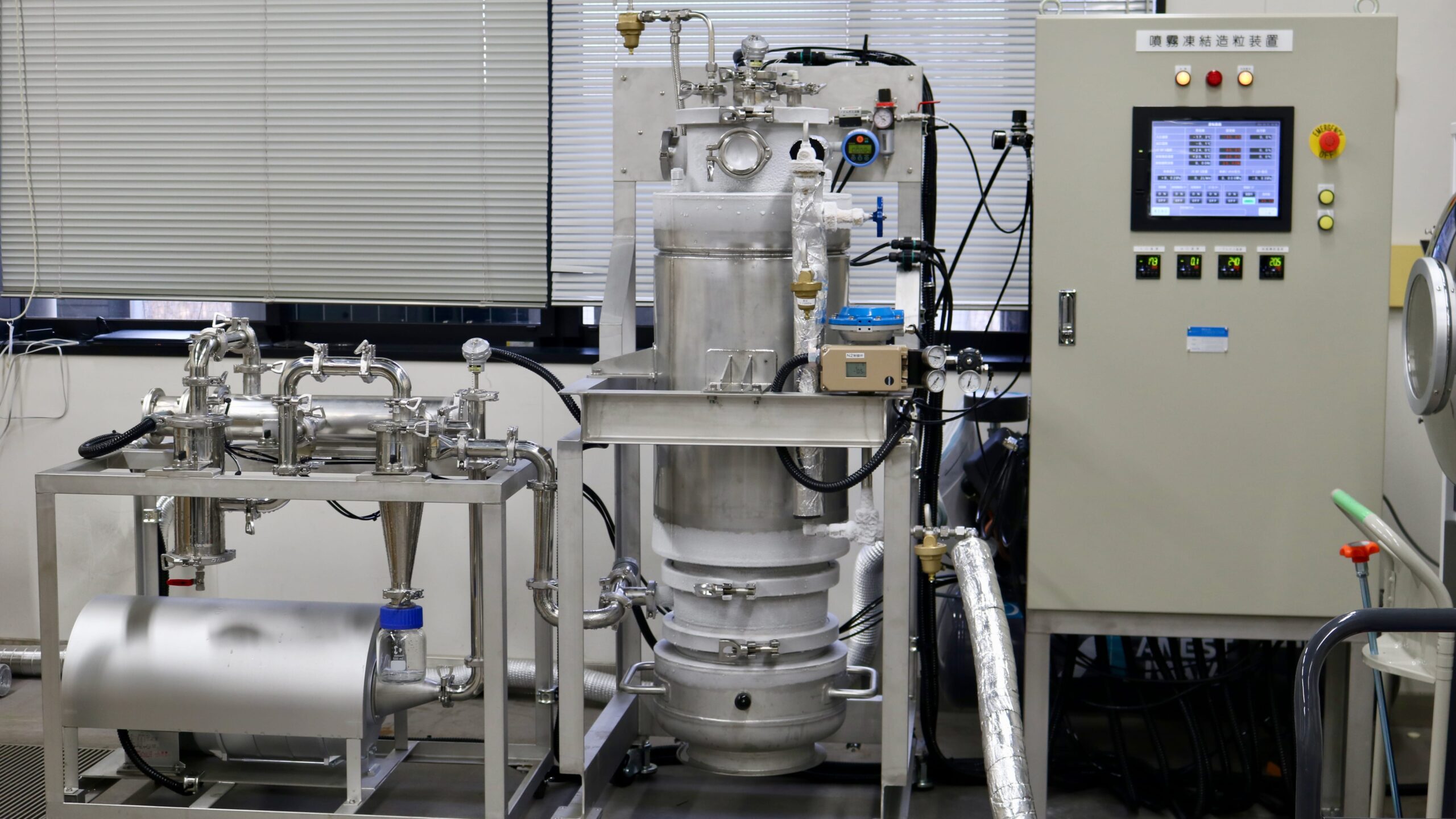
As a brief side note, our powder processing technologies, including spray dryers and freeze granulators, are also used in applications related to probiotics and prebiotics, which are food ingredients that nourish beneficial gut bacteria and support their activity.
We also encourage you to explore the following application notes:
Prebiotics – Spray Drying of Oligosaccharides
Probiotics – Spray Drying of Lactic Acid Bacteria and Bifidobacteria
High Viable Bacteria Rate – Spray Drying and Freeze Granulation
Research to date has revealed numerous important findings, including:
• Gut microorganisms contribute to the development of the immune system.
• Gut microorganisms interact with intestinal cells and help establish themselves within the gut environment.
• Imbalances in microbial communities may contribute to allergic symptoms.
Many discoveries have been made, yet the world of gut microorganisms remains filled with unanswered questions.
One fundamental question continues to drive research efforts worldwide:
“What constitutes a healthy gut environment?”
Scientists around the globe are conducting cutting-edge research to answer this seemingly simple question. However, it may still take considerable time before we fully understand the complete picture.
Toshiya Shigeno / Hayato Kato